
Applied Behaviour Analysis (ABA)
Meaningful, individualised behaviour change
What is Applied Behaviour Analysis (ABA)?
ABA Therapy is an organised, verified methodology of behaviour analysis that concentrates on comprehending and enhancing behaviour through techniques grounded in research and session data.
Contemporary, assent based ABA that builds functional skills, communication and independence, with progress guided by session data and family coaching at its core.
- Increased functional communication
- Reduction in challenging behaviours
- Greater independence in daily routines
- Improved social and play skills
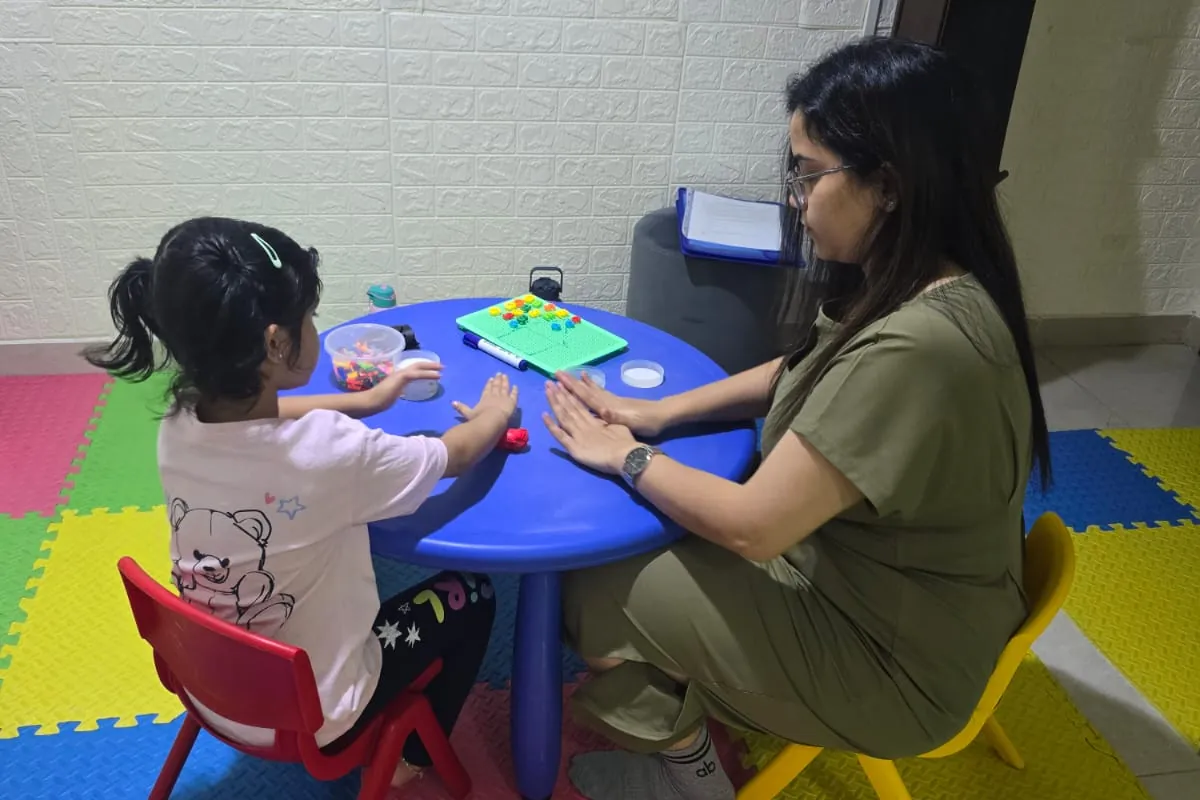
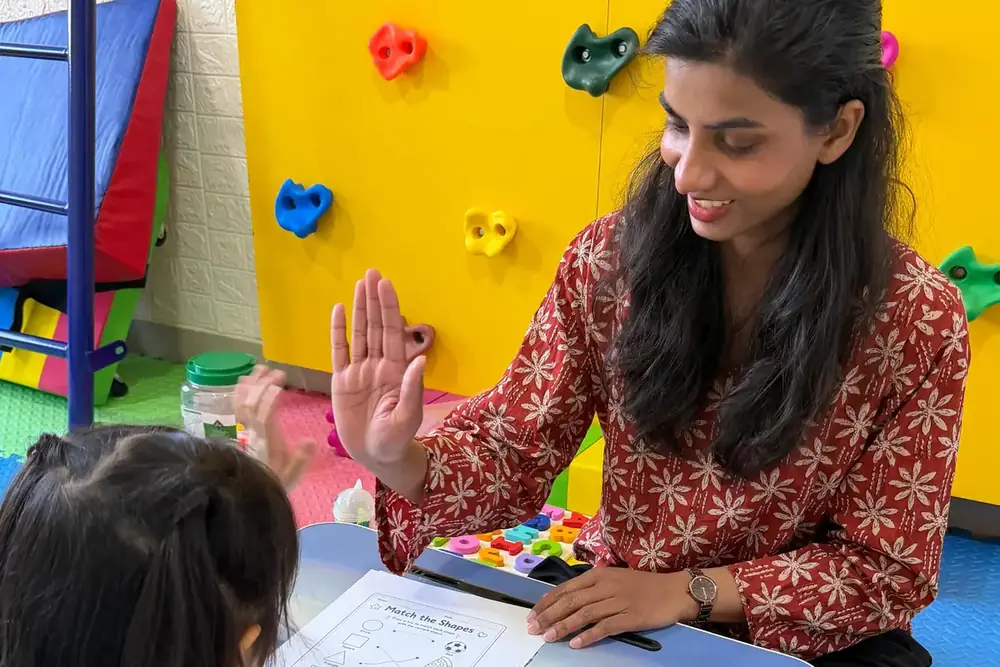
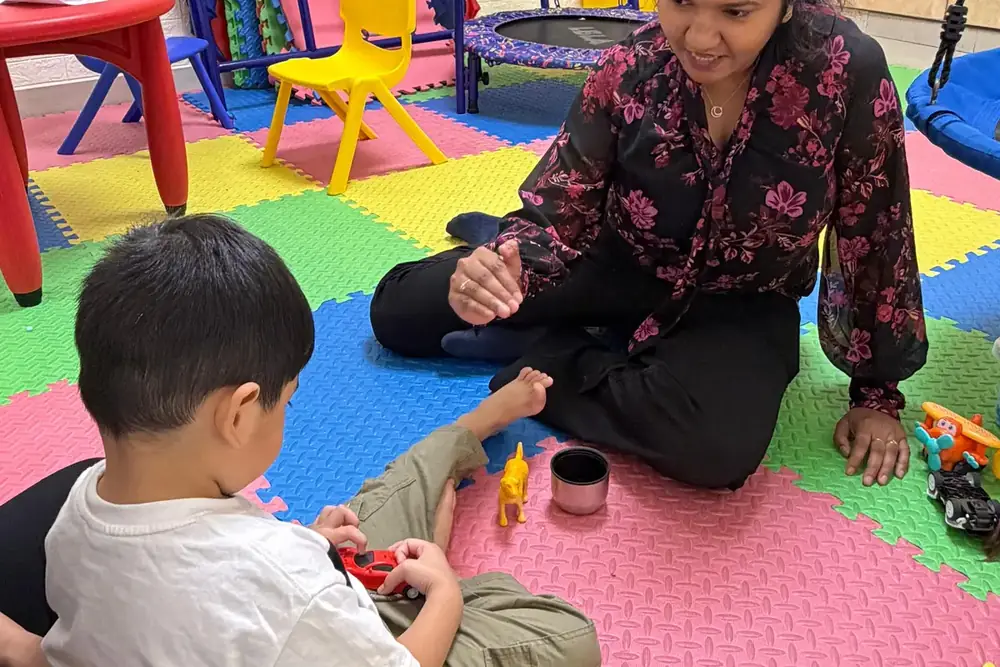
Child and teen behavioural therapy in Dubai
How behavioural therapy helps children build positive skills for everyday life, and how we work with your family.
Behavioural Therapy
At Belief Shaping Therapies we strongly believe that every child is special, distinct, in every sense! While some children are born with natural ability, show strong aptitude towards fellow human beings, education and career, there are others who find it difficult to manage their emotions, communicate, follow routines, or adjust to changes in their environment.
If your loved one is facing these upheavals, and you are searching for “Child or teen behavioural therapy in Dubai” then you have arrived at the right web address. Behavioural therapy helps a child untether from these issues. It teaches your loved ones to react / respond differently within the same environment. In short BT can actually change detrimental learned behaviour to make everyday life easier, positive and rewarding.
Behavioural Therapy: Helping Children Build Positive Skills for Everyday Life
We don't play the role of a doctor, a family physician. Instead, we focus on understanding your child, the behavioural patterns, and then design personalized plan to tweak them. Our aim is not to change your child’s behaviour. Instead, we help children overcome these setbacks to communicate, learn, cope effectively, and participate in daily activities positively.
Every child is unique. Some children may find it difficult to manage their emotions, communicate their needs, follow routines, interact with others, or cope with changes in their environment. Behaviour Therapy can help children understand their behaviour and gradually develop skills that make everyday life easier and more positive.
At Belief Shaping Therapies, we use Behaviour Therapy as a supportive and personalized approach. Our aim is not simply to change a behaviour, but to understand why a behaviour is happening and teach children more effective ways to communicate, learn, cope and participate in daily activities.
What is Behavioural Therapy Session?
At the very outset, you need to understand that behavioural therapy is an action-based, collaborative form of psychotherapy. Your child is one of the participants, and the other is our certified specialist. Our therapist talks to your child, discusses personal events, observes patterns, and based on these observations sets up goals. Everything is structured, linear and seamless. Our therapist offers measurable changes which is passed to you as a parent and shared with your loved one.
Behaviour Therapy is a structured approach that focuses on the connection between a person's behaviour and their environment.
In simple terms, therapists look at what happens before, during and after a behaviour. This helps us understand what may be triggering a particular behaviour and what might be encouraging it to continue.
Once we understand these patterns, therapy can focus on teaching practical and age-appropriate skills. Positive behaviours are encouraged through appropriate reinforcement, while children are given alternatives that help them express their needs and manage difficult situations.
The approach is adapted to each child. What works well for one child may not work in the same way for another.
Confidentiality and How Sessions Work
Behavioural therapy typically starts with observation. Our therapist looks at your child’s reaction, response to events, triggers, routines. The concerned specialist analysis these parameters which in turn offers a pattern. A pattern of reaction, avoidance or detachment. The goal is to understand the harm this pattern is causing to your child. Does it hinder in his / her growth? Does it hamper cordial relationships with peers, teachers and classmates? The goal of behavioural therapy is to break this pattern, make small changes for a larger positive outcome.
Who Can Benefit from Behaviour Therapy?
Not many parents know that behavioural therapy is commonly used as part of a broader support plan for children, addressing common concerns: anxiety, low mood, anger, school stress, and therefore a strategic component of “developmental and behavioural” problem. So, who can benefit? Mentioned below are some pointers. As a parent you need to check them out carefully and then make an informed decision.
- Your little one is unable to follow daily routine instructions.
- Lacks attention / focus.
- Faces age-appropriate independence issues.
- Frequent emotional outbursts resulting in negative response.
- Having behavioural differences that interferes with learning, maintaining relationships.
- Social skills challenges.
- Having difficulty in expressing ( Needs, wants, thoughts ).
- Exhibits impulsive or disruptive behaviour.
Is Cognitive Behavioural Therapy same as Behavioural Therapy?
Behavioural issues typically occur because of certain patterns of actions and thoughts. While behavioural therapy uses pointers from the former, cognitive behavioural therapy exploits pointers from the latter. Together they provide your child a better quality of life. You also need to understand that every child demands a different approach, a different set of tweaks.
As mentioned above, thoughts and actions influence behaviour, and therefore the treatment often focuses on the child’s current behavioural setbacks. The long-term goal is to neutralize emotional outbursts, work on social skills, fix problems such as lack of attention, difficulty in expressing needs and achieving age-appropriate independence.
Working Together: Counselling for Adults and Parents
Parents too play an important role in a child's progress apart from our therapists.
At Belief Shaping Therapies we strongly believe that for any treatment plan to work effectively, certain activities, strategies and skills introduced during therapy need to be practiced at home, in familiar and everyday situations.
The allocated therapist co-ordinates with parent/s, offering guidance on routines, reinforcing commitment, and responding instantly in case of challenges faced at home. The idea is to introduce the treatment plan seamlessly into the real world and not just in the therapy room.
Our approach: play therapy, CBT and parent guidance
Behavioural therapy is an action-oriented form of psychotherapy. It helps change negative behaviour in general. The methodology evaluates behaviour learned over a period of time, identifies the reasons and the impact of these patterns and then helps the child react with healthier, positive responses. There are several behavioural practices and techniques. While some are used solo, there are others which are used in tandem with cognitive behavioural Therapy (CBT), which resolves negative thoughts also. Our inclusive treatment plan not only updates parents on regular basis but insists on their participation for a faster, measurable change.
Why Is Positive Reinforcement Important?
Positive reinforcement is an important part of many Behaviour Therapy programs.
When a child demonstrates a helpful or desired behaviour, the therapist provides something meaningful and encouraging. This might be praise, attention, access to a preferred activity, or another form of positive feedback.
The goal is to help children understand which behaviours are useful and increase the likelihood that these skills will be used again.
Over time, children can become more confident in using these skills in different situations.
Is Behaviour Therapy Only About Changing Difficult Behaviour?
No.
A common misconception is that Behaviour Therapy is only about reducing challenging behaviours. In reality, therapy can also focus heavily on building new skills.
For example, instead of simply trying to stop a child from becoming frustrated, therapy may help the child learn how to ask for help, request a break, communicate discomfort or use coping strategies.
This shift is important because meaningful progress often comes from giving a child a better way to respond, not simply telling them what not to do.
A Personalized Approach for Every Child
There is no single Behaviour Therapy program that works for every child.
Each child has different strengths, needs, interests and learning styles. Our therapists therefore aim to create an individualized plan based on the child's current abilities and the goals that matter most to the child and family.
Progress may involve small steps at first. Learning to communicate a need, complete part of a routine independently, tolerate a change or interact with another child can all represent meaningful achievements.
Key Takeaways of Behavioural Therapy
Effective Communication
One of the most common behavioural setbacks is the lack of expression. Some children find it difficult to express their needs, wants, likes, dislikes which can result in frequent outbursts, anger, and thereby affect daily activities.
Emotional Control
Once our therapist narrows down the pattern, your child is taught simple approaches to not just only recognize negative emotions but also to cope with these associated frustrations. It allows your little one to handle the challenging situations in a controlled manner.
Improved Social Skills & Understanding of Rules
One of the areas behavioural therapy addresses is lack of social skills. In teaches your child to not just participate in group conversations but allow others to speak, debate amicably, react positively by listening to others and thereby learn and imbibe social rules.
Daily-Life Skills
Age-appropriate, structured plan by our therapist also focuses on daily-life skills, emotional resilience, helping children become independent in every sphere, every walk of life ( social, emotional and relational ).
As a parent you need to understand that most human behaviours are learned / adopted, and therefore can be tweaked to build positive skills for everyday life.
Areas we focus on
A snapshot of the skills and goals addressed within this service.
Discrete Trial Teaching (DTT)
Structured, repeated skill acquisition with reinforcement.
Natural Environment Teaching (NET)
Skills practised in natural play and daily routines.
Verbal Behaviour (VB)
Functional communication: manding, tacting, intraverbals.
Behaviour Intervention Plans
Function-based plans reducing challenging behaviour.
Skill Acquisition Programmes
Individualised targets across domains.
Parent & Caregiver Training
Strategies that generalise skills to home and school.
How we deliver it
A clear, goal oriented process with measurable progress.
FBA
Functional Behaviour Assessment identifies the 'why' behind behaviour.
BIP
A function-based Behaviour Intervention Plan is designed.
Implement
Trained therapists deliver 1:1 and group sessions.
Analyse
Weekly data review guides programming decisions.
Common questions
Is ABA only for autism?
ABA principles benefit many developmental and behavioural needs, though it is widely used for autism support.
How many hours of ABA does my child need?
Hours are individualised based on assessment, typically 10 to 30 hours per week.
Do you use punishment-based methods?
No. We use contemporary, assent based approaches centred on reinforcement.
At what age can ABA therapy start?
ABA can start from the toddler years, and early intervention often brings the biggest gains. Goals are tailored to each child's age and needs, from toddlers to teenagers.
Affordable therapy with inclusivity,
available every day of the week.
Every child gets a minimum of 2 sessions per week, the benchmark for faster results. Book a session at our clinic today.