
Psychological Assessments
Clear answers, shared with care
What is Psychological Assessments?
Psychological assessments help us understand how a person thinks, learns, feels, behaves, and functions in everyday life. Depending on the individual’s age and concerns, assessments may include IQ and cognitive assessments, learning and academic assessments, attention and executive functioning assessments, personality assessments, emotional and behavioral assessments, and memory or neurocognitive assessments. Each assessment is selected based on the questions that need to be answered and is tailored to the individual. The goal is to provide a clearer understanding of strengths, challenges, and appropriate support.
From developmental and cognitive assessments to full educational evaluations, every assessment is completed in house and finished with a feedback session, so families know exactly what the results mean and what to do next.
- A clear clinical picture of strengths and needs
- Practical recommendations for school and home
- Documentation for school support where applicable
- A therapy plan grounded in evidence


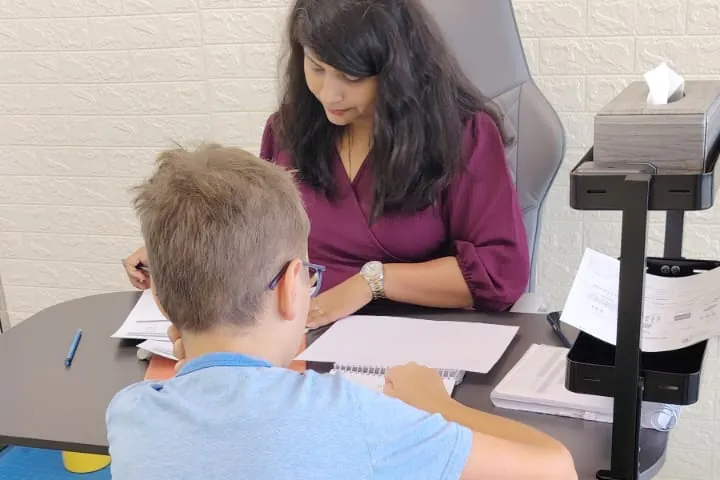
Assessments across Different Stages of Life
Children
Assessments may focus on cognitive development, learning, attention, behaviour, emotional wellbeing, developmental concerns, and social functioning.
Psychological Assessment for Children
Children may not always have the words to explain what they are experiencing. A psychological assessment can help us understand their emotional, behavioural, learning, social, and developmental needs.
Depending on the concerns, the assessment may look at areas such as attention and concentration, learning abilities, memory, language, emotional functioning, behaviour, social skills, and overall cognitive development. Information may be gathered through conversations with parents or caregivers, observation of the child, and age-appropriate psychological tests.
An assessment may be helpful when a child is experiencing learning difficulties, attention concerns, behavioural changes, emotional difficulties, developmental concerns, or challenges at home or school. The aim is not simply to identify a problem, but to understand the child as a whole and identify their strengths as well as areas where additional support may be helpful.
Adolescents
Assessment may explore learning, attention, emotional wellbeing, personality, behaviour, coping, relationships, and developmental concerns.
Psychological Assessment for Adolescents
Adolescence is a period of significant emotional, social, academic, and developmental change. Difficulties during this stage can sometimes be difficult to understand, particularly when changes in behaviour or mood are involved.
An adolescent psychological assessment can explore areas such as emotional wellbeing, personality, coping skills, attention, learning, cognitive abilities, behaviour, relationships, and social functioning. Depending on the reason for referral, the assessment may also help clarify concerns related to academic performance, anxiety, low mood, adjustment, self-esteem, or behavioural difficulties.
The assessment process is adapted to the adolescent’s age and level of understanding. Where appropriate, information from parents, caregivers, teachers, or other relevant sources may also contribute to a more complete understanding of the young person’s needs.
Adults
Assessments may focus on cognitive functioning, attention, personality, emotional wellbeing, work or relationship difficulties, and other psychiatric or psychological concerns.
Psychological Assessment for Adults
Adults may seek a psychological assessment for many different reasons, including emotional concerns, difficulties with concentration or memory, changes in behaviour, work-related challenges, relationship difficulties, or a need for greater clarity about their psychological functioning.
An assessment may examine areas such as cognitive abilities, attention, memory, emotional functioning, personality, coping patterns, and everyday functioning. The specific assessment methods are selected according to the individual’s concerns and the questions that need to be answered.
The purpose is to develop a clear and balanced understanding of the person’s current functioning. Where appropriate, the findings can help guide treatment planning, psychological support, workplace or educational recommendations, or referrals for further evaluation.
Older Adults
Assessment may focus on memory, attention, reasoning, mood, cognitive changes, and the impact of these changes on everyday functioning.
Psychological Assessment for Older Adults
As people grow older, changes in memory, attention, thinking, mood, and everyday functioning may occur. While some changes can be part of normal ageing, others may require closer assessment.
A psychological assessment for older adults can help examine memory, attention, reasoning, problem-solving, language, mood, and other aspects of cognitive and emotional functioning. The assessment may also consider how these changes are affecting daily activities and independence.
When cognitive changes are a concern, assessment findings can help distinguish between normal age-related changes and patterns that may require further medical or specialist evaluation. Information from family members or caregivers may also be useful, particularly when there have been noticeable changes in everyday functioning.
Assessment Categories
IQ & Cognitive · Learning · Attention & ADHD · Personality · Emotional & Behavioral · Memory & Neurocognitive · Developmental · Autism
IQ & Cognitive Assessments
Understand reasoning, problem-solving, memory, processing speed, and other aspects of cognitive functioning.
Cognitive assessments examine different aspects of how a person thinks and processes information. Depending on the assessment, this may include reasoning, problem-solving, verbal abilities, visual-spatial skills, working memory, and processing speed.
These assessments can be useful for understanding a person’s cognitive strengths and areas of difficulty. For children and adolescents, they may form part of an evaluation for learning concerns, giftedness, developmental questions, or educational planning. For adults and older adults, cognitive assessment may be considered when there are concerns about changes in thinking, attention, or memory.
An IQ score is only one part of understanding a person’s abilities. Psychological assessment looks at the broader pattern of strengths and difficulties rather than relying on a single number.
Learning & Academic Assessments
Explore learning abilities and identify difficulties related to reading, writing, mathematics, or overall academic performance.
Learning assessments help us understand how a child or adolescent learns and whether there are specific areas that are proving difficult.
Depending on the concerns, assessment may examine skills related to reading, writing, spelling, mathematics, language, memory, processing, and academic achievement. It may also consider cognitive abilities that influence learning.
These assessments can be particularly helpful when a child is consistently struggling at school despite receiving appropriate teaching and support. They may contribute to identifying specific learning difficulties and can help inform educational strategies and recommendations.
Attention, ADHD & Executive Functioning Assessments
Explore attention, concentration, impulsivity, hyperactivity, working memory, planning, organization, and other executive functioning skills.
Attention involves more than simply being able to concentrate. Attention and executive functioning include skills such as staying focused, managing impulses, remembering information, organizing tasks, planning, shifting between activities, and completing tasks.
An ADHD assessment looks at patterns of attention, hyperactivity, impulsivity, and executive functioning, while also considering how these difficulties affect everyday life. For children and adolescents, information from parents, caregivers, teachers, and other relevant settings may be considered. For adults, the assessment may explore how attention and executive functioning difficulties affect work, relationships, and daily responsibilities.
An ADHD diagnosis is not based on a single psychological test. A comprehensive assessment considers developmental history, current symptoms, functioning across different settings, and other possible explanations for the difficulties. The findings can help clarify whether further clinical support or intervention may be appropriate.
Personality Assessments
Help understand patterns in personality, emotions, relationships, coping, and behavior.
Personality assessments help explore relatively consistent patterns in how a person thinks, feels, relates to others, and responds to different situations.
Depending on the purpose of the assessment, these may provide information about emotional patterns, interpersonal functioning, coping styles, personality characteristics, and areas of psychological difficulty.
Personality assessment can be useful as part of a broader psychological evaluation and may help a person and their clinician develop a better understanding of their experiences and needs.
Emotional & Behavioral Assessments
Explore concerns such as anxiety, low mood, emotional regulation, behavioral difficulties, and adjustment.
Emotional and behavioural assessments focus on how a person is managing emotions and responding to everyday situations.
They may explore concerns such as anxiety, low mood, emotional regulation, stress, anger, behavioural difficulties, social functioning, or adjustment to significant life changes. For children and adolescents, information from parents, caregivers, teachers, and other relevant sources may sometimes be included to understand how difficulties appear across different settings.
The aim is to understand the nature and impact of the concerns and to help identify appropriate support.
Memory & Neurocognitive Assessments
Examine memory, attention, language, reasoning, and other cognitive abilities, particularly when there are concerns about changes in cognitive functioning.
Memory and neurocognitive assessments examine different areas of cognitive functioning, including memory, attention, language, reasoning, processing speed, and problem-solving.
These assessments can be particularly relevant for older adults or anyone experiencing noticeable changes in memory or thinking. They can help identify patterns of strengths and difficulties and provide useful information for further clinical evaluation when needed.
Assessment findings should always be interpreted alongside medical history, daily functioning, and other relevant information.
Developmental Assessments
Help understand a child or adolescent’s developmental, social, emotional, behavioral, and adaptive functioning.
Developmental assessments are primarily used with children and adolescents to understand development across areas such as communication, learning, social interaction, emotional functioning, behaviour, and adaptive skills.
They may be considered when there are concerns about developmental progress, communication, social interaction, behaviour, school functioning, or everyday independence.
A developmental assessment takes the child’s age, developmental history, environment, and individual differences into account.
Autism
Provide a structured evaluation of characteristics associated with conditions such as autism spectrum disorder, using appropriate clinical information and assessment methods.
Autism-Related Assessments
An autism-related assessment looks at patterns in social communication, interaction, behaviour, and sensory experiences, along with relevant developmental history.
Depending on the individual’s age and needs, the assessment may explore areas such as social understanding, communication, relationships, restricted or repetitive behaviours, sensory sensitivities, flexibility, and everyday functioning.
For children and adolescents, developmental history and information from parents, caregivers, teachers, or other relevant people can provide important context. For adults, the assessment may also explore lifelong patterns and how these characteristics affect relationships, work, and daily life.
Autism cannot be identified through a single test or questionnaire alone. A comprehensive assessment brings together information from different sources and considers the person’s developmental history and current functioning.
Your assessment, from start to finish
What to Expect During an Assessment
A psychological assessment usually begins with a discussion about the concerns, background, and purpose of the assessment. Depending on the individual and the reason for referral, the process may include clinical interviews, psychological tests, questionnaires, behavioural observation, and information from parents, caregivers, or other relevant people.
There is no single assessment that is appropriate for everyone. The psychologist selects methods based on the person’s age, concerns, abilities, and the questions the assessment needs to address.
Following the assessment, the findings are brought together to provide a clear understanding of the individual’s strengths, difficulties, and needs. Recommendations may be provided where appropriate, which can help guide further intervention, support, or referral.
Understanding Your Assessment Results
Psychological assessment results are best understood as part of a larger picture. Test scores are interpreted alongside the person’s history, current concerns, behaviour, and everyday functioning.
Following the assessment, the psychologist can explain the findings in clear and understandable language and discuss relevant recommendations or next steps. Where necessary, the assessment may also help determine whether further psychological, educational, medical, or specialist evaluation would be beneficial.
Our Approach
We believe psychological assessment should be more than a collection of test scores. It is an opportunity to understand the individual in the context of their development, experiences, environment, and everyday life.
Our assessments are conducted using appropriate, evidence-based psychological methods and are adapted to the individual’s age and needs. We aim to make the process respectful, comfortable, and easy to understand, while maintaining professional standards of confidentiality and care.
How we deliver it
A clear, goal oriented process with measurable progress.
Intake
A detailed history of concerns, development and school experience.
Testing
Standardised assessments delivered in paced, comfortable sessions.
Report
A written report in plain language, free of jargon.
Feedback
A session to explain results and agree the next steps.
Common questions
Who conducts the assessments?
Qualified psychologists and specialists, using standardised tools appropriate to each age and question.
How long does an assessment take?
It depends on the question being asked. Screening may take one session, while a full educational assessment is typically spread across two to three visits.
Do schools accept your reports?
Reports are written to be shared with schools and include recommendations teachers can apply directly.
Do you assess for ADHD and autism?
Yes. Our assessments include ADHD and autism screening alongside developmental, cognitive and behavioural assessment, finished with a full report and a feedback session.
Affordable therapy with inclusivity,
available every day of the week.
Every child gets a minimum of 2 sessions per week, the benchmark for faster results. Book a session at our clinic today.